


A Restorative Journey Through Toyama: Temple Rituals, Herbs, and Sacred Water
Japan is easy to travel at full speed. A few days can disappear into temples, museums, markets, train rides, and a growing list of places that feel too important to skip. Toyama offers another kind of trip, one where slowing down becomes part of the experience rather than time taken away from sightseeing.
In the foothills of Kamiichi and Tateyama, spiritual practice, mountain water, local food, and contemporary wellness sit surprisingly close together. At Oiwasan Nissekiji, visitors can try shabutsu before exploring a temple complex built into rock and forest. Healthian-wood brings herbs into its restaurant, garden, and fragrance workshop, while nearby Ananotani Reijo leads down into a ravine where people have collected sacred spring water for generations
Oiwasan Nissekiji: Finding Focus Through Shabutsu
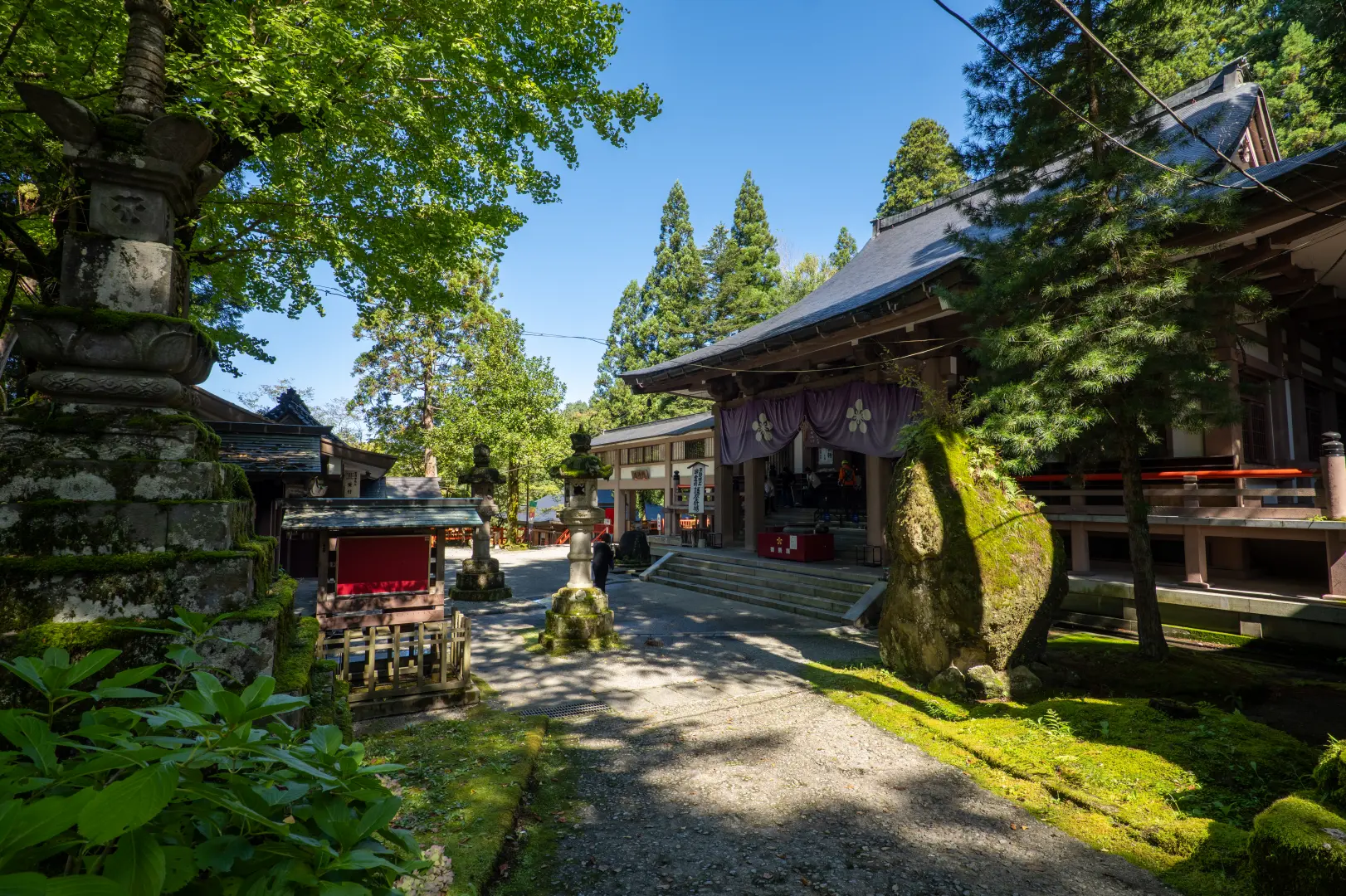
Oiwasan Nissekiji lies in the foothills of Kamiichi, where the temple seems to descend into the landscape. Stairs lead down through trees toward halls, waterfalls, and exposed rock, gradually revealing more of the complex as you go.
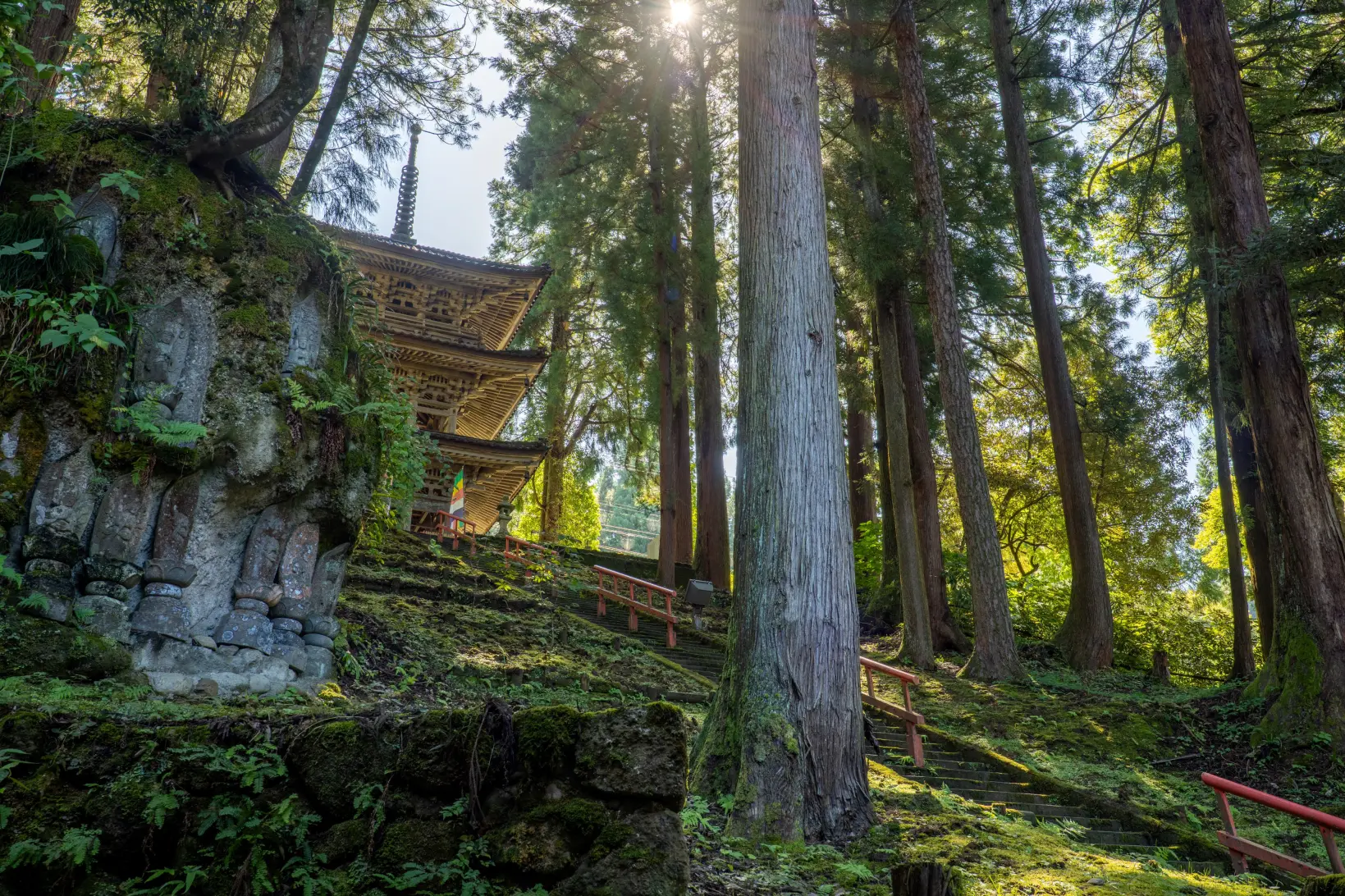
At its center is an enormous image of Fudo Myo-o, a Buddhist deity associated with protection, discipline, and overcoming obstacles. His fierce expression can seem intimidating, but its purpose is compassionate: Fudo Myo-o confronts ignorance and destructive impulses in order to guide and protect. At Nissekiji, he and several accompanying Buddhist figures are carved directly into the cliff, making the rock face itself part of the sacred image.
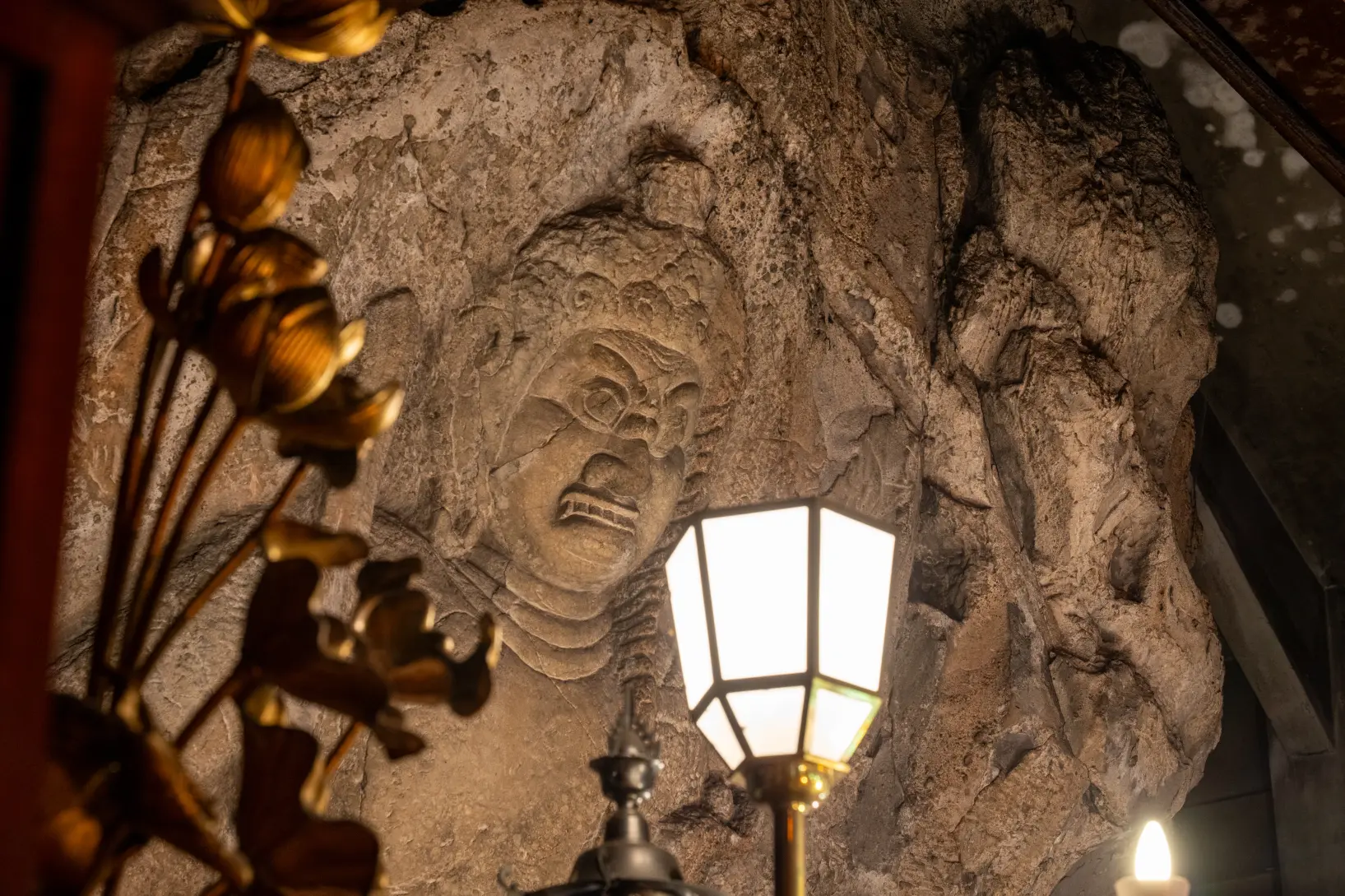
What is particularly unusual is the access. Visitors can walk right up to the carving, look closely at details in the stone, and take photographs, rather than viewing the image from behind a distant barrier. Many important Buddhist images in Japan are kept inside halls or shown publicly only on specific occasions, so the chance to stand this close gives Nissekiji a very different feel.
One of the best ways to engage more deeply with the temple is through shabutsu, or Buddhist image copying. Participants trace the image of Fudo Myo-o as well as the small written characters around it, then add their own name, the date, and a personal wish — often for health, happiness, or safety. Most of the image is printed as a guide, but the lines defining Fudo Myo-o’s chest are deliberately left blank for you to complete yourself.
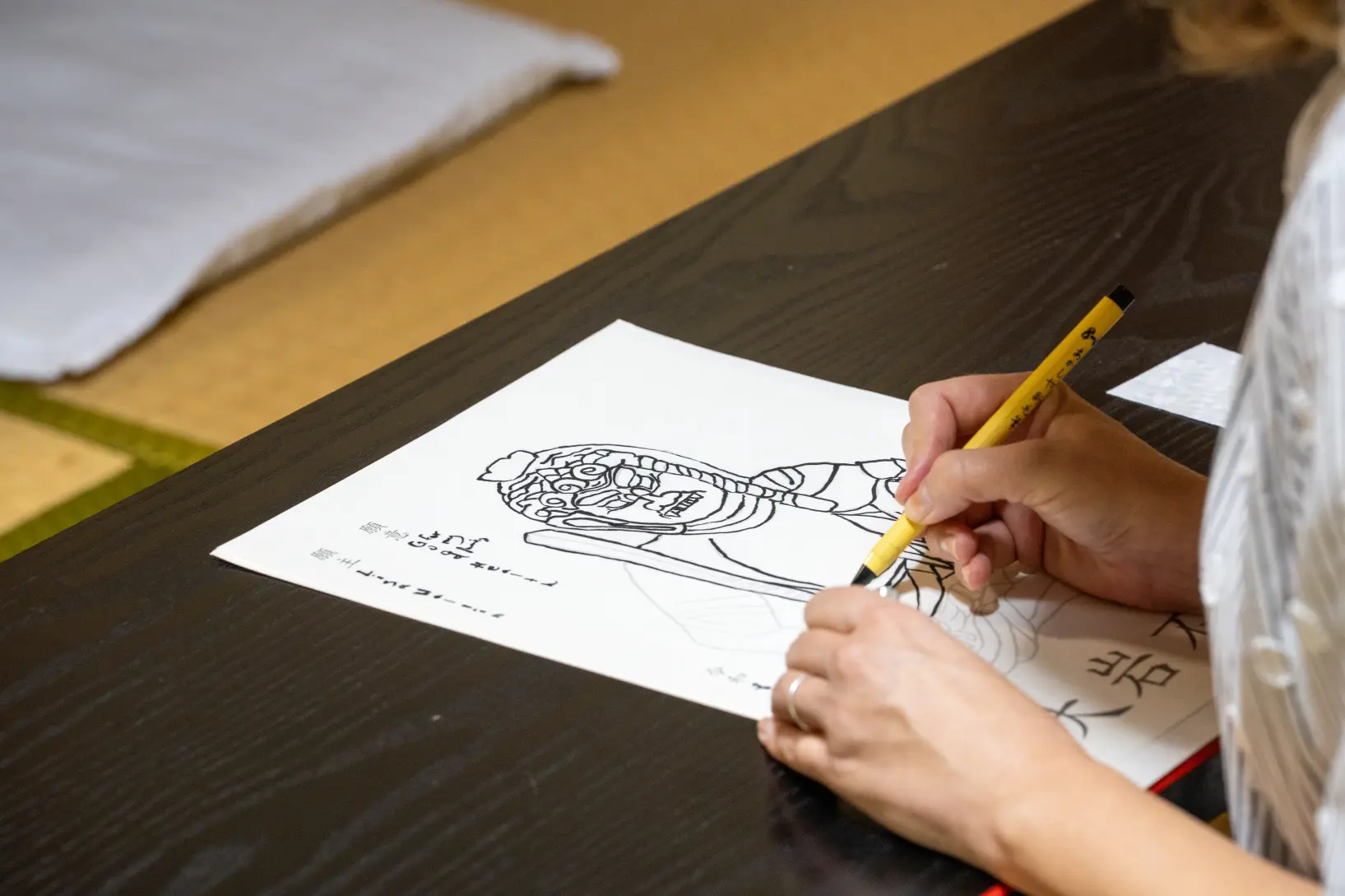
The session begins with a brief purification ritual. Fragrant powder is rubbed into the hands, while a small clove is placed between the teeth and kept there for the duration of the experience. Traditionally it helps purify the breath, but it also discourages conversation and provides a small, constant reminder to remain focused. With a personal wish or intention in mind, you then begin tracing wherever feels natural; there is no prescribed starting point and no expectation of artistic perfection.
Following one fine line into the next soon becomes more absorbing than expected. Attention shifts toward the movement of the brush, and by the time you reach the unfinished portion, completing Fudo Myo-o yourself feels less daunting than it did at the beginning. The experience takes around an hour, after which overseas visitors can take the completed work home or leave it with the temple to be ritually burned. A third option allows it to be made into a personal amulet, although this generally requires a Japanese address for later delivery.
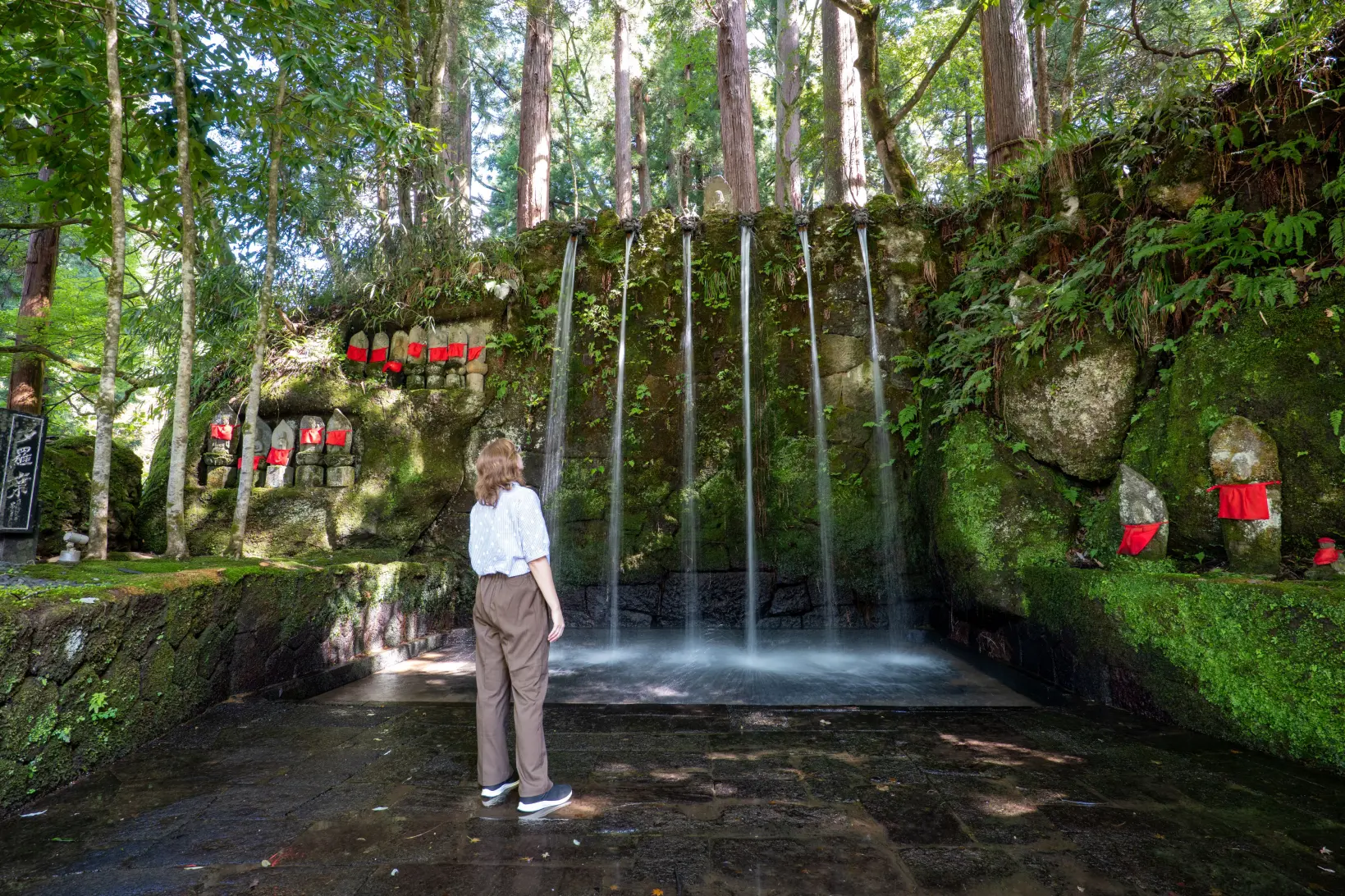
Nissekiji is also known for takigyo, or waterfall ascetic training, in which participants dressed in white stand beneath cold falling water as a practice of purification and discipline. Training continues throughout the year, including winter, and remains an active part of temple life.
After shabutsu, leave time to wander the grounds, where smaller halls, the compact rock-cut Agakutsu grotto, the distinctive unfinished three-story pagoda, and the temple’s waterfalls make it easy to stay longer than planned.
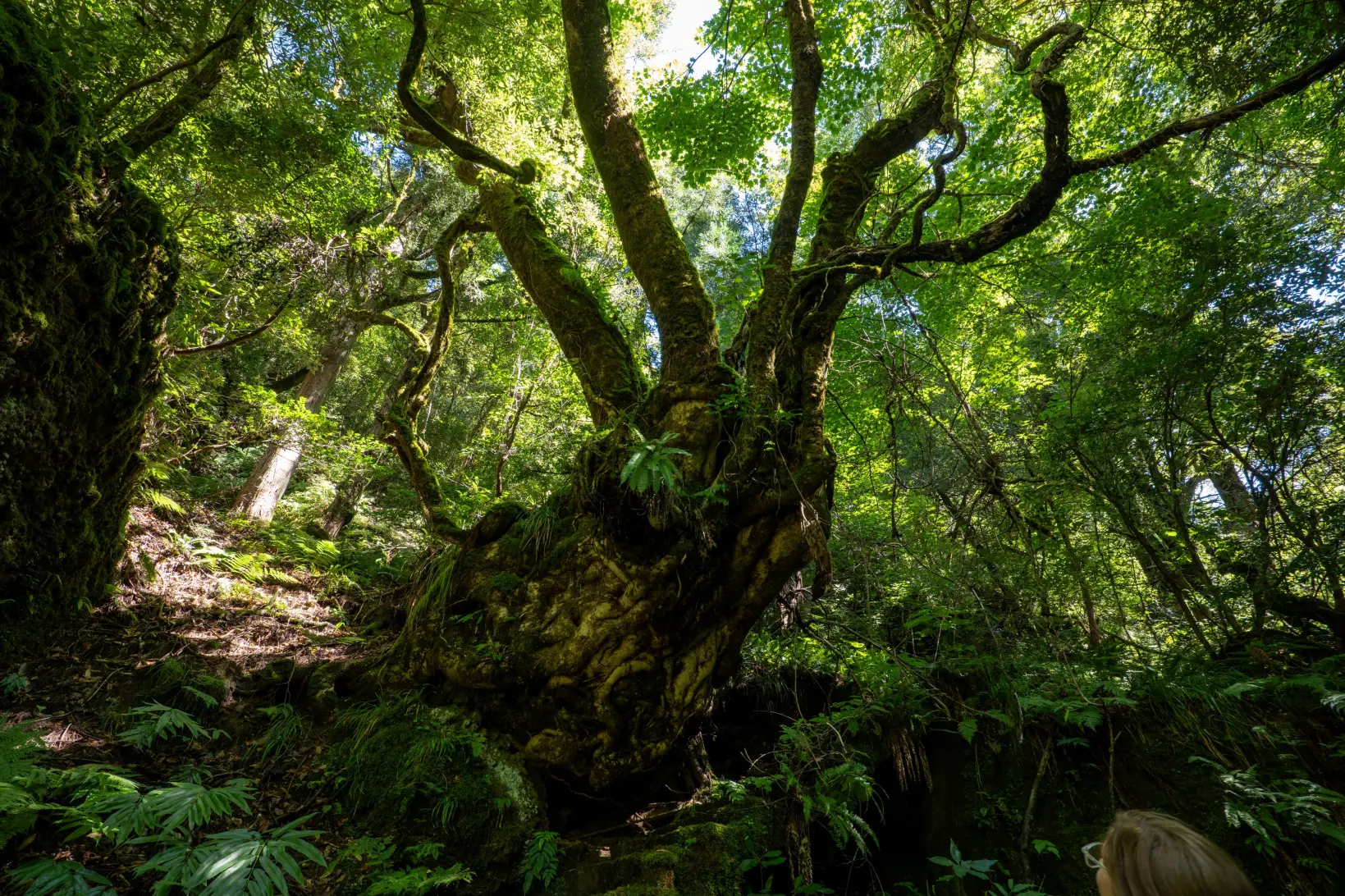
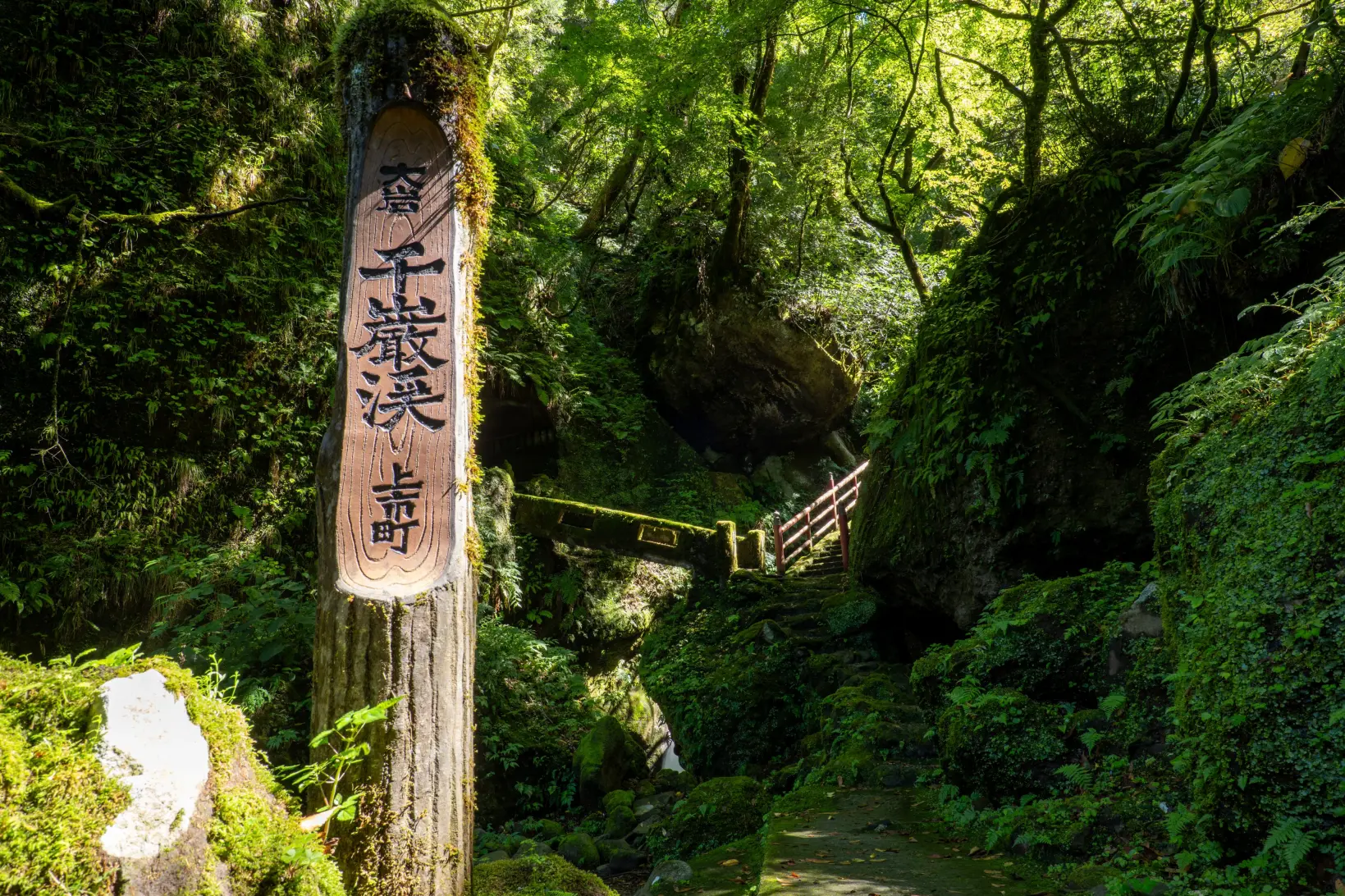
Only a few minutes on foot from Nissekiji, Sengankei Gorge feels like stepping into a different kind of sacred landscape. The path follows a narrow ravine where moss-covered rocks, high trees, and running water create a cooler, quieter atmosphere, with nature and spirituality seeming to overlap in a way that feels distinct from the temple grounds.
Even at an unhurried pace, the there-and-back walk takes around 15 to 20 minutes and requires no special hiking equipment. Near the far end, stone steps lead up to Okunoin, a small sacred space cut into the rock, adding to the slightly otherworldly feeling of the gorge.
Stay on the designated path, as the rocks beside the stream and areas beyond the trail can be dangerous. The ground can become slippery when wet, especially after rain, so extra caution is advised in poor weather conditions.
A quick visit to Nissekiji can take 30 minutes to an hour, but with shabutsu, Sengankei, and lunch nearby, the wider Oiwa area can easily fill three or four hours
Plan Your Visit: Oiwasan Nissekiji
Address: 163 Oiwa, Kamiichi, Nakaniikawa District, Toyama
Visiting hours: 9:00 a.m.–4:00 p.m.
Shabutsu: 9:00 a.m.–3:00 p.m.; approximately 60 minutes; ¥3,000
Reservations: Advance booking recommended. Tel. 076-472-2301
Suggested time: 30–60 minutes for a short temple visit; around 3–4 hours for shabutsu, the grounds, Sengankei, and lunch
Access from Toyama Station: Take the Toyama Chiho Railway to Kamiichi Station, approximately 25–40 minutes (¥700), then around 10 minutes by car. The municipal bus from Kamiichi Station to Oiwa takes approximately 15–20 minutes (¥200), but services are very infrequent, so check the timetable in advance.
Nissekiji: https://visit-toyama-japan.com/en/places-to-go/31004
Sengankei: https://www.info-toyama.com/attractions/102799
Nissekiji・Sengankei: https://ooiwasan.com/#googtrans(ja|en)
After the Temple: Oiwa Somen at Ryokan Dangoya
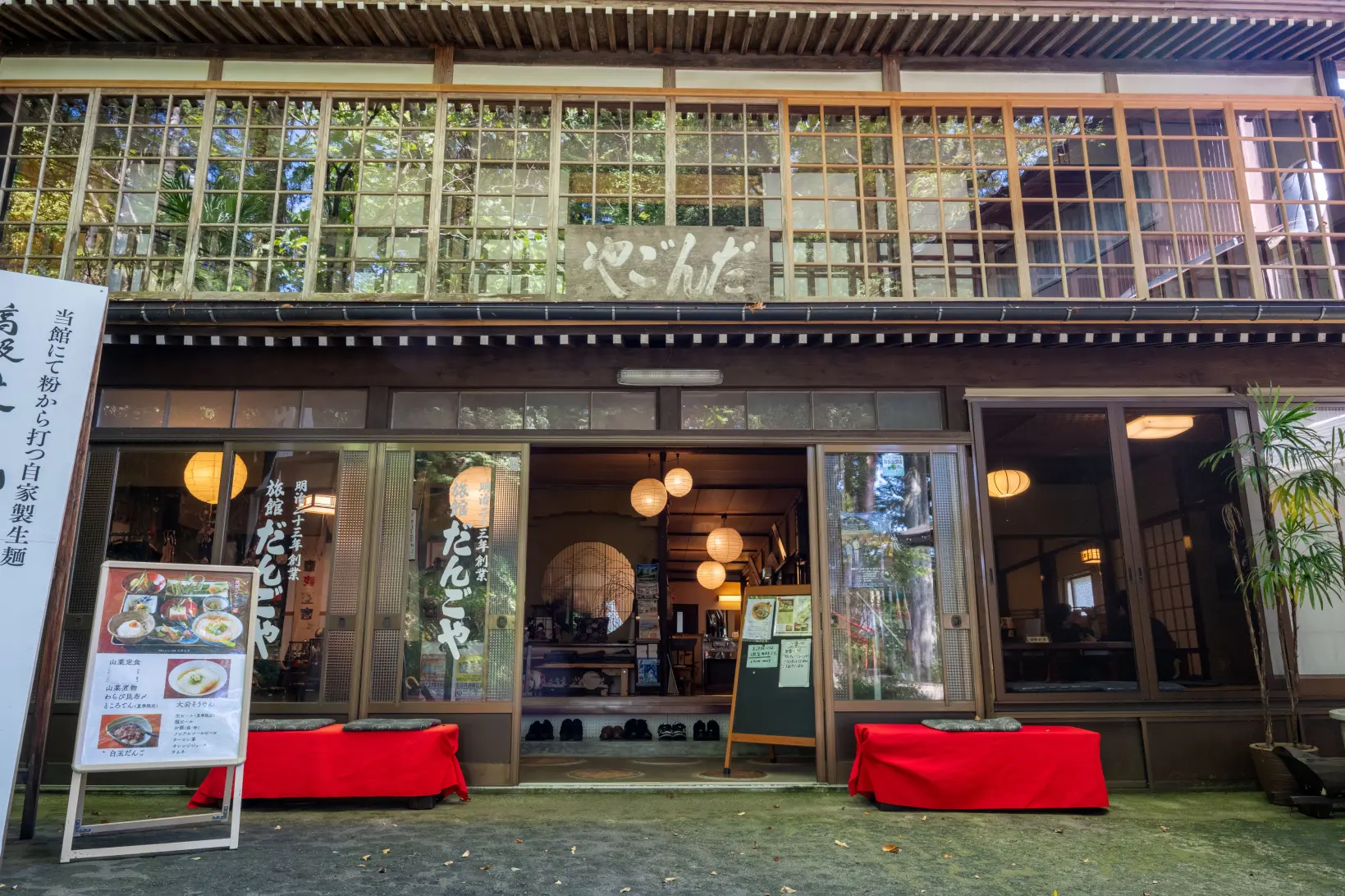
A visit to Oiwa has another long-standing tradition: somen. Just a minute from Nissekiji, Ryokan Dangoya is a classic place to try Oiwa somen, with fine aged noodles served chilled in a region long associated with clear mountain water.
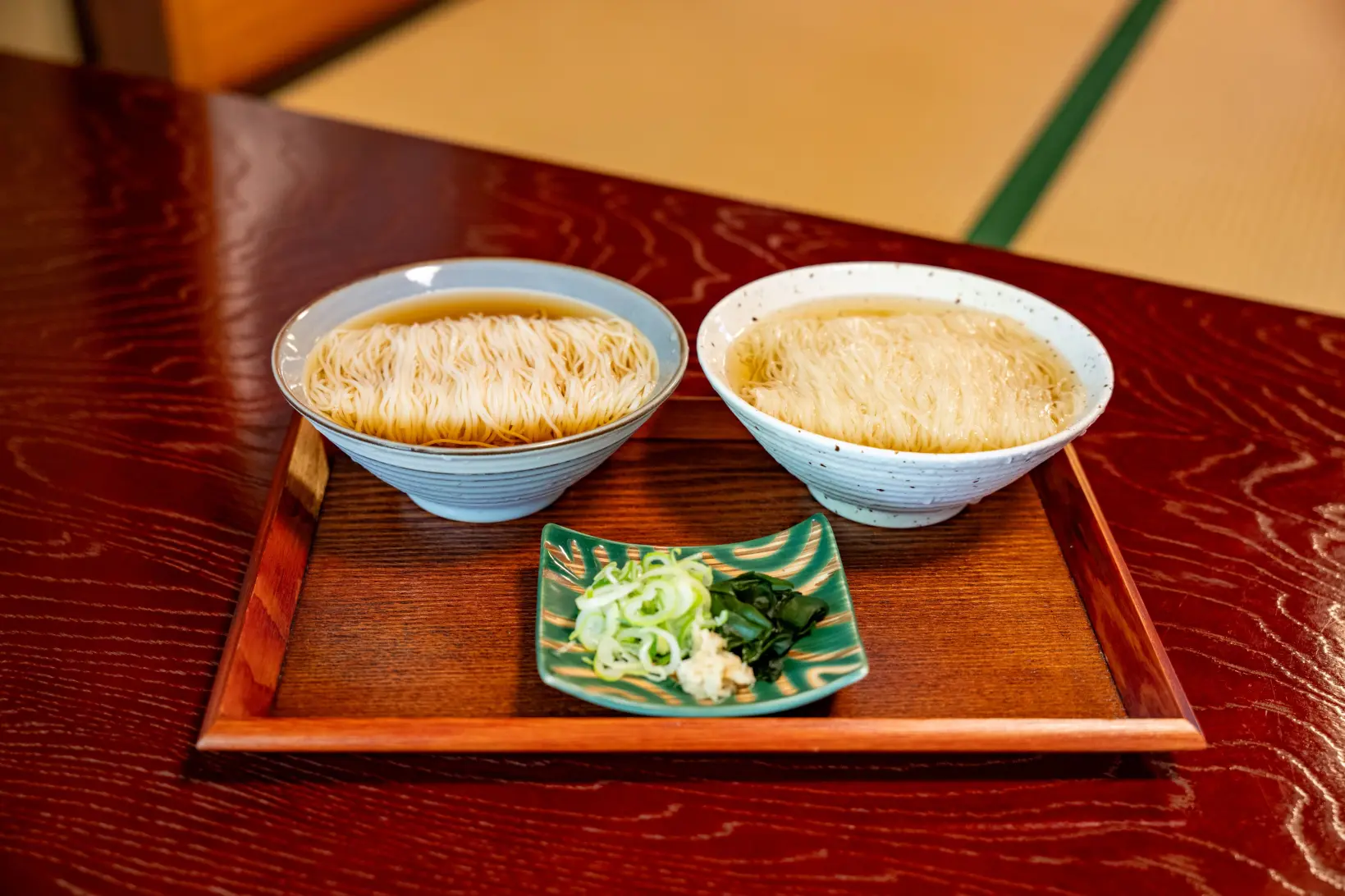
During the warmer season, Ryokan Dangoya also offers its own nama somen, a fresh, undried version with a softer, springier texture. The somen kurabe set is the best way to try both styles side by side: the nama somen is supple and slightly chewy, while the traditional Oiwa somen is finer and firmer. Mountain vegetables and other local dishes can round out the meal, and the somen season generally runs from late April through October.
Plan Your Visit: Ryokan Dangoya
Address: 32 Oiwa, Kamiichi, Nakaniikawa District, Toyama
Access: About one minute on foot from Nissekiji
Hours: 11:00 a.m.–3:00 p.m.
Restaurant closure: November through March; the inn remains open
Somen kurabe set: ¥1,500
Oiwa somen: ¥700
Mountain vegetable set meal: ¥2,500
More information: https://ryokandangoya.com/corner699534/pg4122497.html
Healthian-wood: A Contemporary Retreat Among Herbs
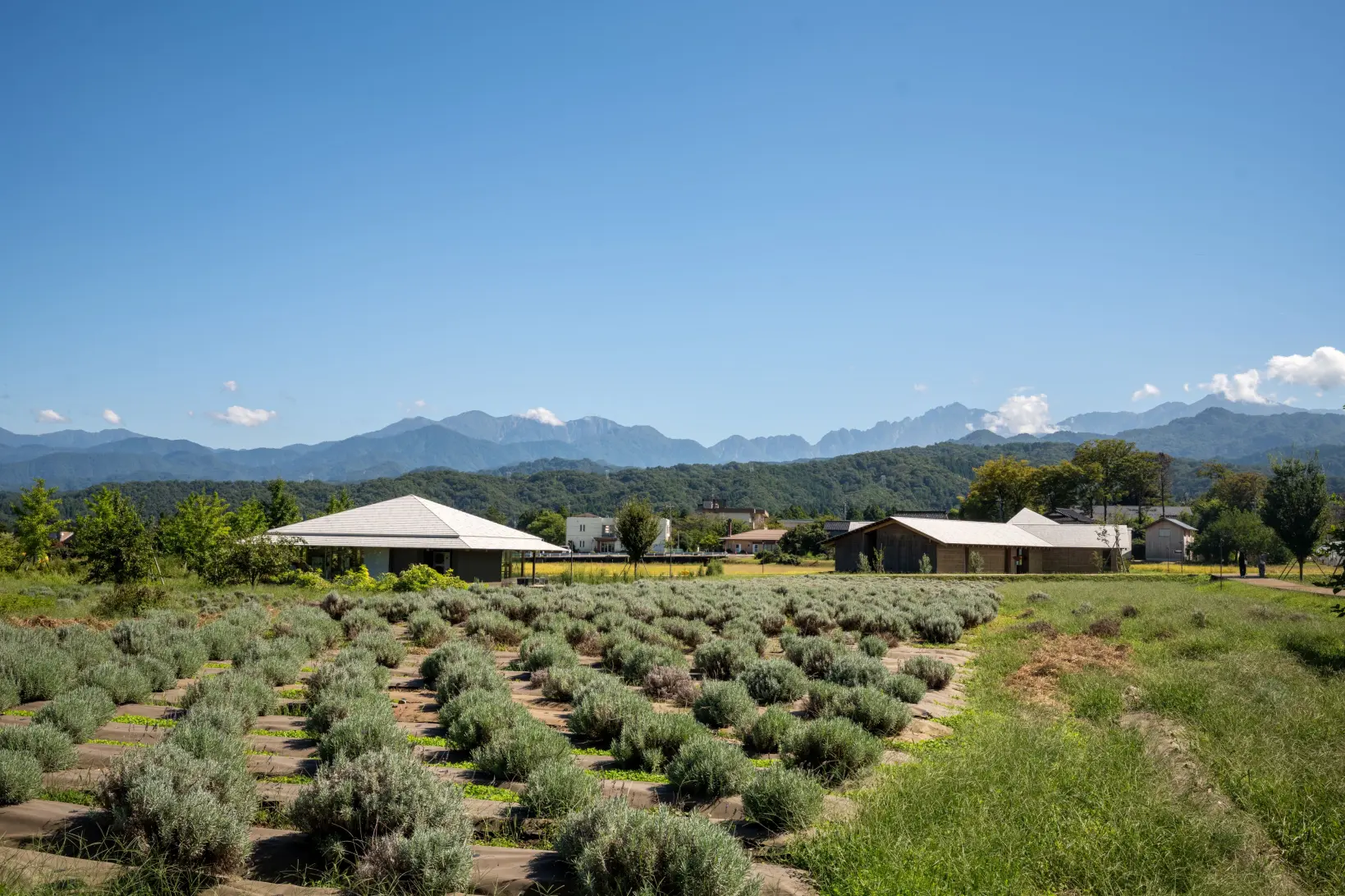
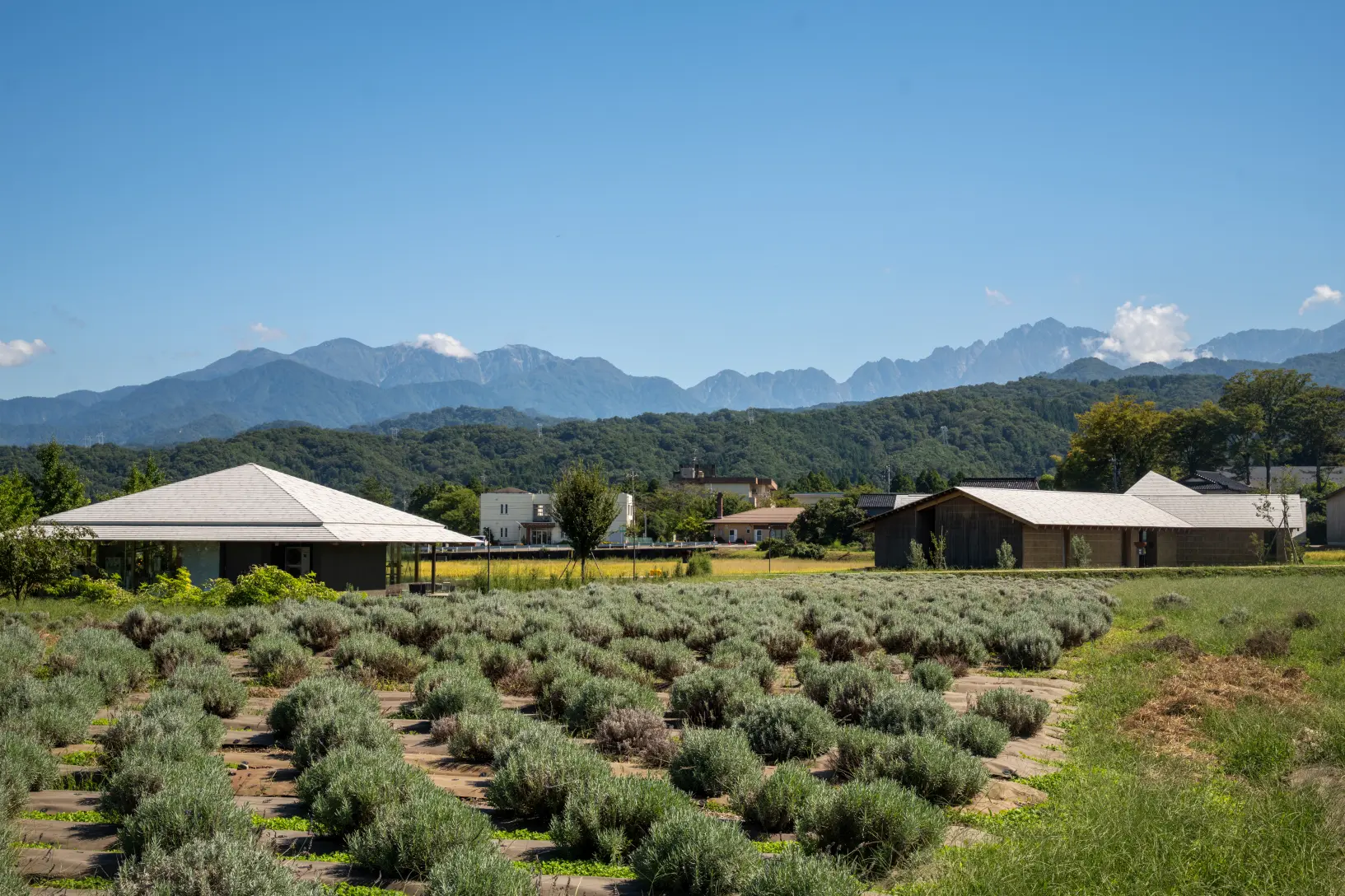
From Kamiichi, the journey shifts toward a contemporary interpretation of wellness at Healthian-wood in neighboring Tateyama. Spread across open countryside, the property combines gardens, food, workshops, architecture, and accommodation, with views of the Tateyama mountain range when the weather is clear.
At The Kitchen, the cuisine is centered around French medicinal cuisine, incorporating herbs and spices to create dishes that nourish both body and mind.
Seasonal dishes draw on Toyama vegetables, seafood, rice, eggs, herbs, and medicinal ingredients without making the meal feel overly virtuous. The rice served is Healthian-wood Rice, a pesticide-free rice grown and harvested on the Healthian-wood grounds. Herbs grown on the property are also incorporated into sauces and dressings
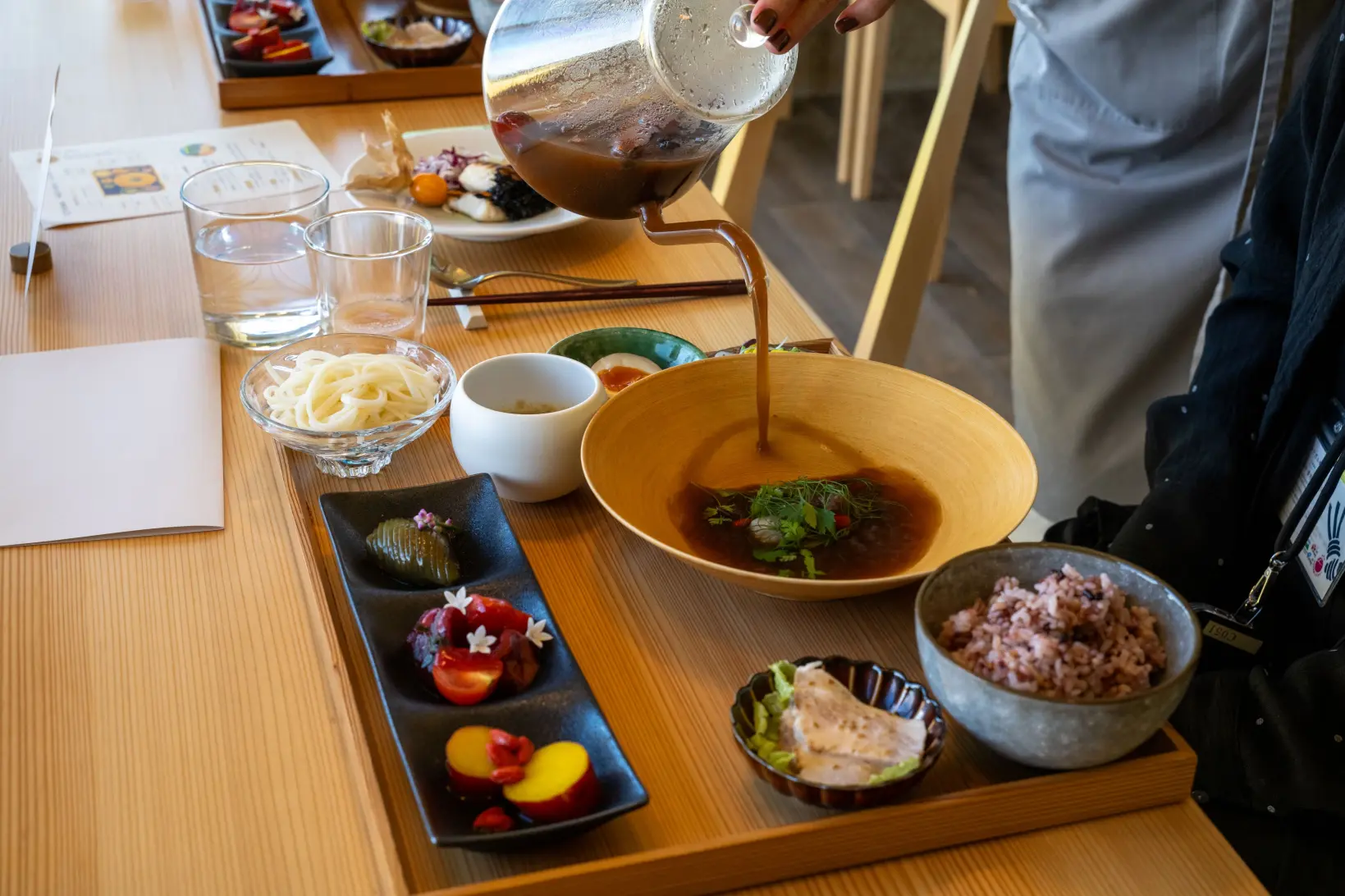
Even kitchen scraps are put to use. Vegetable skins and trimmings form the base of a broth combined with shojin-style ingredients such as dried shiitake mushrooms and soybeans, then layered with herbs and spices selected according to Japan’s traditional 24 seasonal divisions. It is a thoughtful approach to wellness, but one grounded in flavor and everyday ingredients rather than restriction.
Outside, The Garden grows familiar herbs such as lavender and rosemary alongside himehakka, a delicate mint species native to Japan. Some are used in the restaurant, while others are distilled on site, creating a direct link between the plants growing outside and experiences at The Workshop

The aroma fragrance spray workshop makes that connection especially tangible. Visitors begin with herb water distilled at Healthian-wood, then smell their way through a selection of essential oils, comparing notes and deciding which combination feels right. Some scents are fresh or herbal, others floral, woody, or sweeter, and adjusting the balance can change the character of the spray surprisingly quickly.
Once the blend is chosen, the oils are mixed into the herb water to create a personal fragrance spray to take home. English and Chinese instruction sheets are available, so non-Japanese speakers can follow the process. However, as staff are only able to communicate in Japanese, participants must be able to understand Japanese to take part in the experience. The standard fragrance workshop takes about 50 minutes
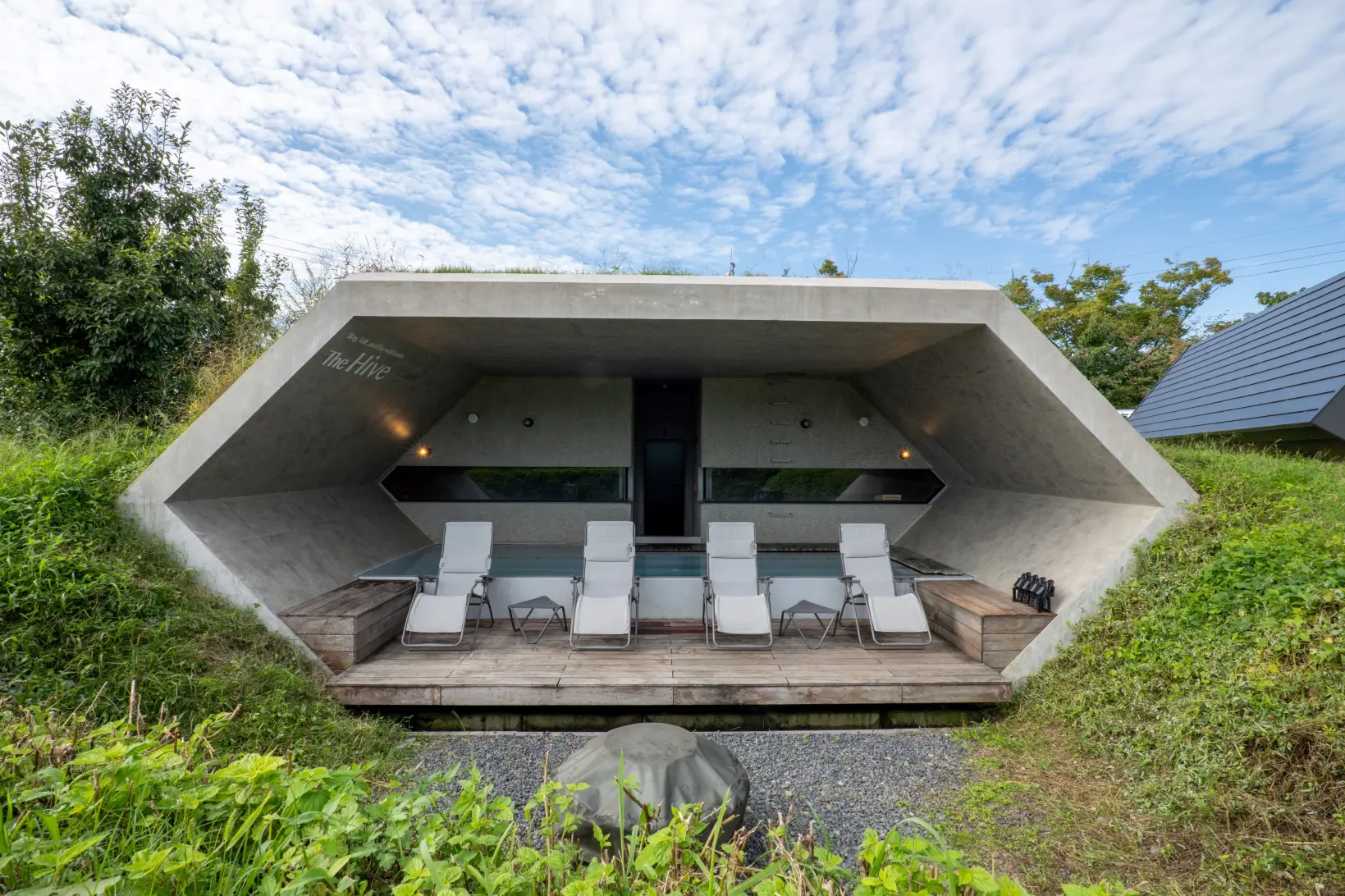
Those who want to stay longer can extend the experience overnight. Accommodation includes The Hive, with its distinctive honeycomb-inspired architecture and sauna facilities, as well as a renovated traditional house suited to families and groups. The surrounding fields and broad mountain views encourage visitors to linger rather than treat Healthian-wood as a quick stop.
Plan Your Visit: Healthian-wood
Address: 57-1 Nitchu-Uwano, Tateyama, Nakaniikawa District, Toyama
Access from Toyama Station: Take the Toyama Chiho Railway Tateyama Line to Gohyakkoku Station, around 30–40 minutes (¥700), then approximately 10 minutes by car.
Local buses to Healthian-wood take around 10 minutes (¥200). The nearest bus stops are Nicchu Uwano and Sogo Koen. Please note that regular bus services do not operate on weekends and are limited in frequency. On-demand bus services are also available but require advance registration and are only available in Japanese.
The Kitchen
11:30 a.m.–3:00 p.m. (L.O. 2:30 p.m.)
Closed Wednesdays
Toyama Wellness Cuisine: ¥3,300
Dessert: +¥650
No reservation required for Toyama Wellness Cuisine.
Aroma Fragrance Spray Workshop
10:00 a.m.–4:00 p.m.
Closed Wednesdays
Approximately 50 minutes
¥3,300; +¥550 for a selection of additional Toyama essential oils
1–20 participants
Language: Conducted in Japanese, but English & Chinese instruction sheets are available.
The Hive
Available for overnight stays and reservation-only day-use sauna sessions when there is no accommodation booking.
More information: https://www.info-toyama.com/attractions/90194
Anantan: A Sacred Spring Nearby
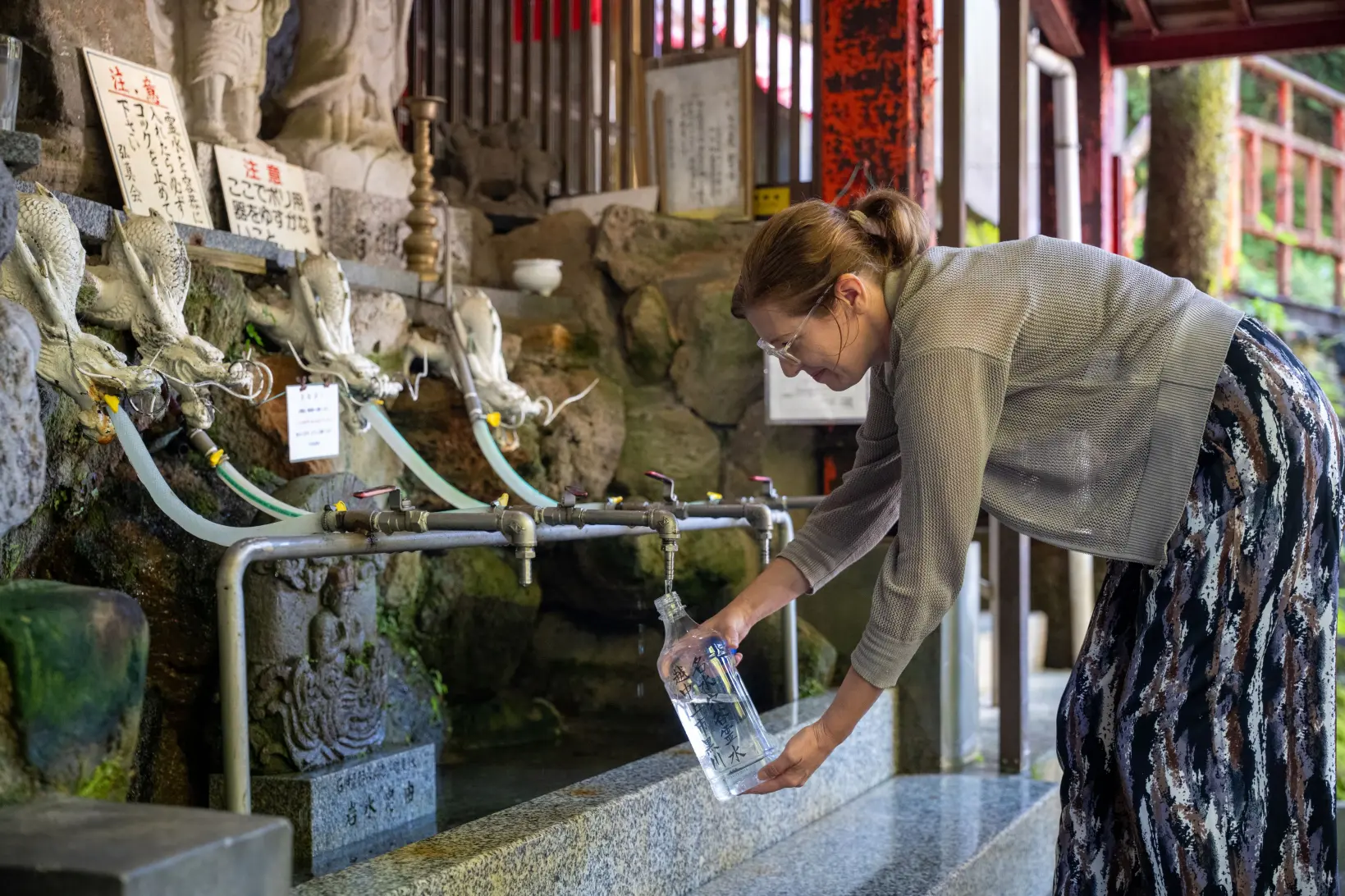
From Healthian-wood, Anantan Reijo is close enough to make a natural final stop in the same area. The contrast is part of its appeal: after Healthian-wood’s contemporary approach to wellness, Ananotani brings the idea of restoration back to pilgrimage, folk belief, and water.
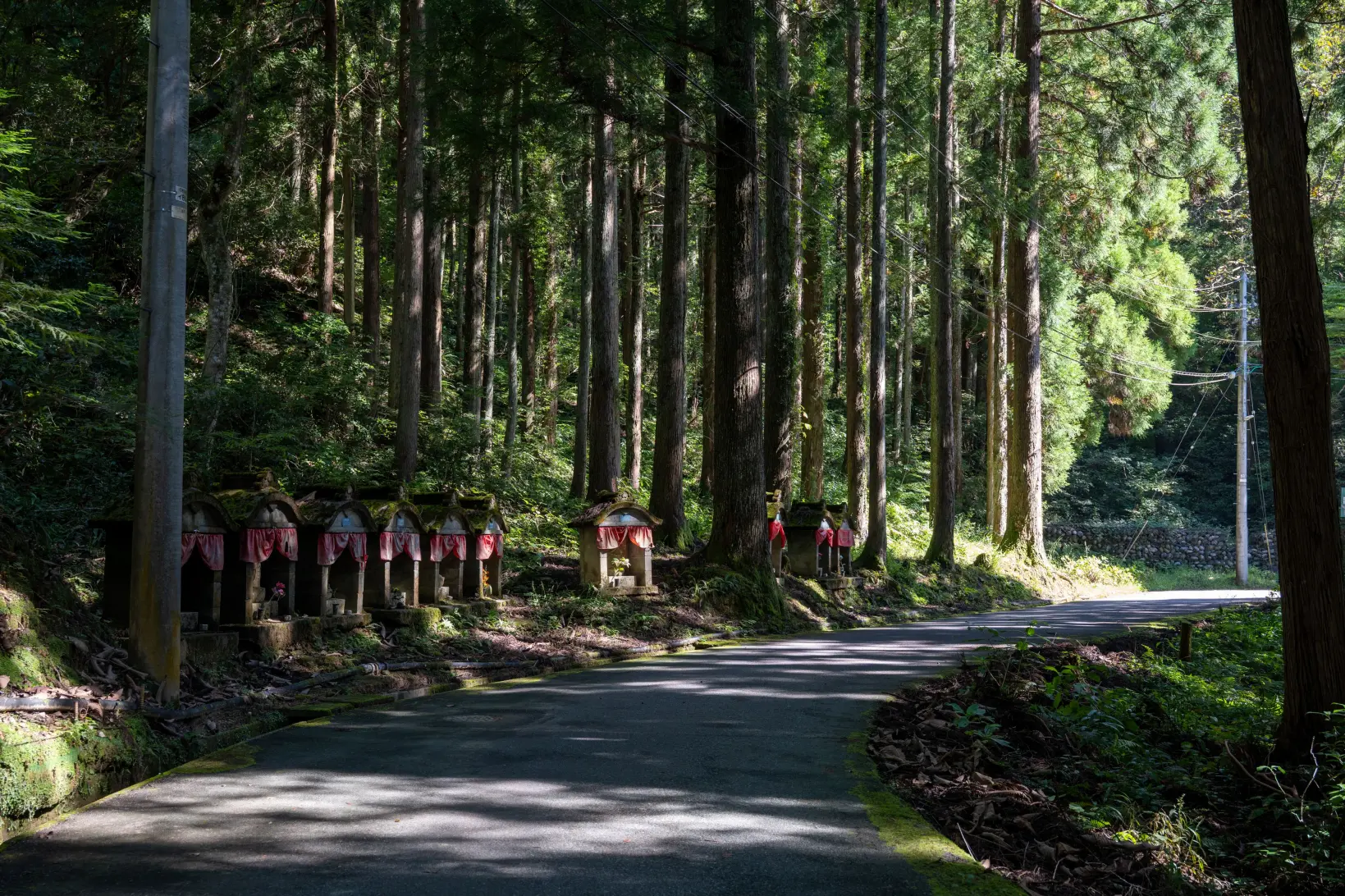
From the entrance and reception area, visitors follow a wooded approach lined with Kannon statues before descending 108 stone steps into the ravine. At the bottom is a hall associated with Yakushi Nyorai, the Buddha of healing, while spring water emerges from the cave area behind the sacred image.
The water is one of Japan’s nationally selected famous waters, but its significance here goes beyond purity. It has long been regarded as reisui, or sacred water, traditionally believed to help with illness, and visitors still arrive with bottles and larger containers to take it home. Walking through the woods, descending to the hall, offering respects, and finally collecting the water turns a simple refill into something closer to a short pilgrimage
Plan Your Visit: Anantan Reijo
Address: Kurokawa, Kamiichi, Nakaniikawa District, Toyama
Hours: March–November, 8:00 a.m.–5:00 p.m.; December–February, 8:00 a.m.–4:00 p.m.
Closed: Year-end and New Year holidays (December 31–January 3)
Estimated visit time: Around 20–30 minutes for the round trip from the parking area to the water collection point and back
Access from Toyama Station: Take the Toyama Chiho Railway to Kamiichi Station, approximately 25–40 minutes (¥700), then around 15 minutes by car
Payment: Bring cash for parking, water-management fees, and any containers purchased on site
More information: https://www.info-toyama.com/attractions/31008
Slowing Down in Toyama
Taken together, these places offer different interpretations of retreat without requiring a rigid wellness itinerary. At Nissekiji, it begins with the deliberate movement of a brush across paper. Sengankei replaces that concentration with the sound of water over stone. Dangoya turns the same mountain water into something you can taste, while Healthian-wood draws herbs and local produce into food, scent, and rest. At Anantan, the journey ends with water again, this time emerging from a sacred landscape where people have been coming to collect it for generations.
None of these experiences ask for very much. You do not need to master Buddhist practice, commit to a strict wellness program, or disappear into the mountains for days. What they ask for is attention: enough time to notice the pressure of the brush, the temperature beneath the trees, the texture of two kinds of noodles, the scent you instinctively reach for, or the weight of a bottle of spring water on the climb back uphill.
For travelers accustomed to measuring a Japan trip by how much they manage to fit into each day, that shift in pace can feel surprisingly valuable. Toyama rewards doing a little less, and noticing considerably more
Photo gallery: How to reach the spring at Anantan Reijo
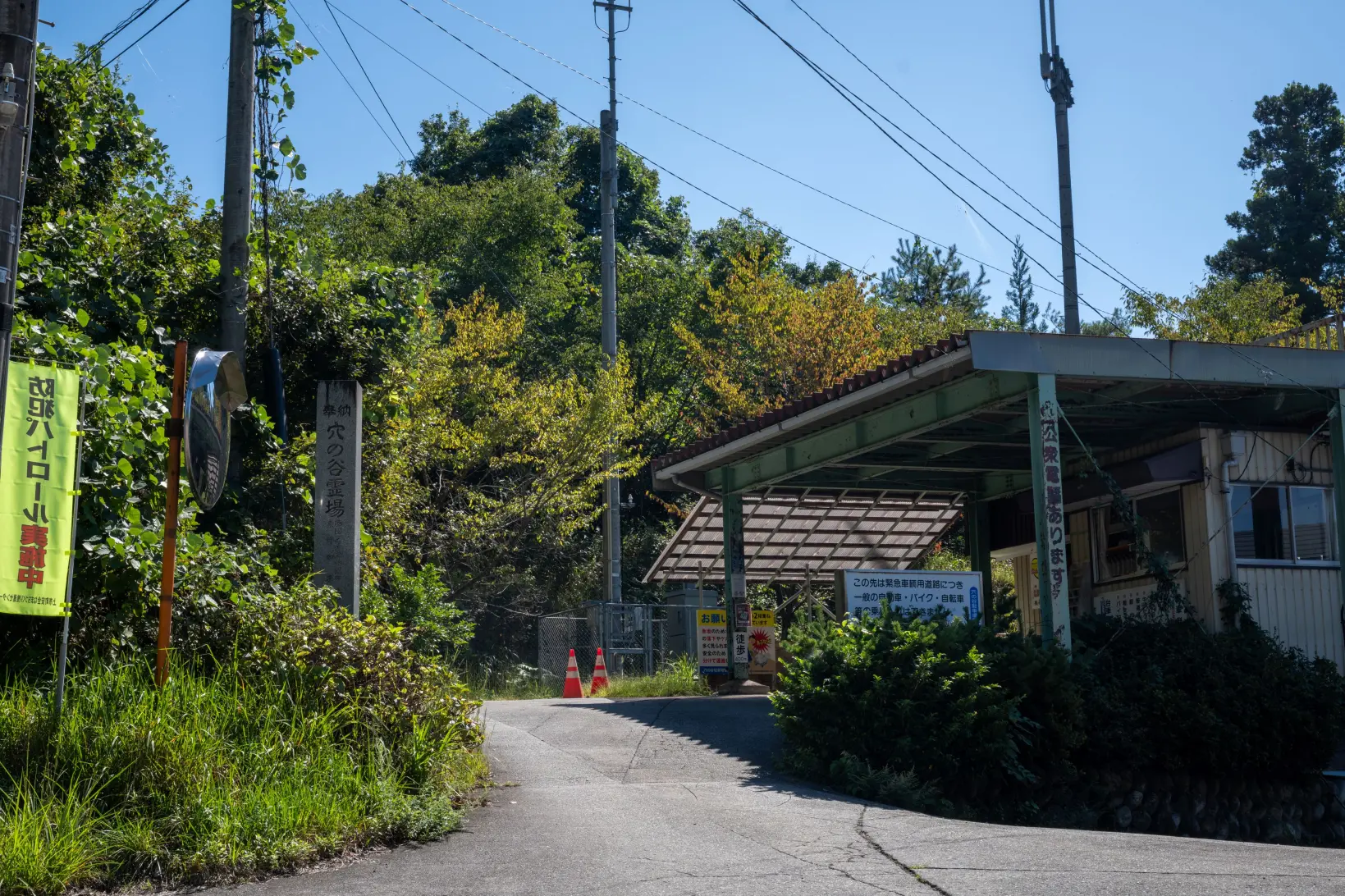
1. Arrive at the Anantan entrance and parking area
Leave your car in the designated parking area and continue toward reception on foot. The spring itself is located deeper within the sacred grounds.
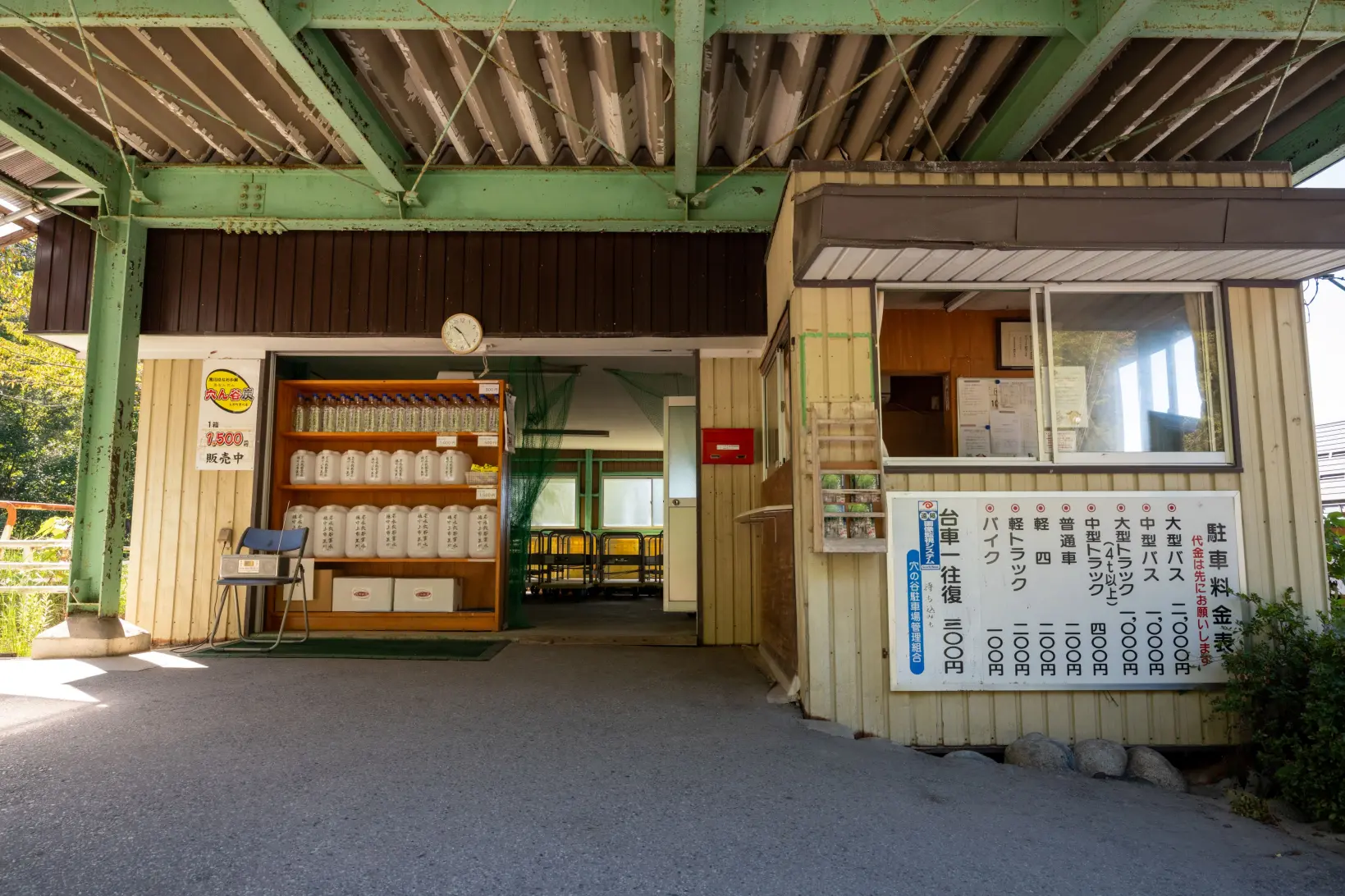
2. Stop at the reception area
Check in at the reception before heading toward the spring. This is also where you pay the parking fee, and containers can be purchased here if needed.
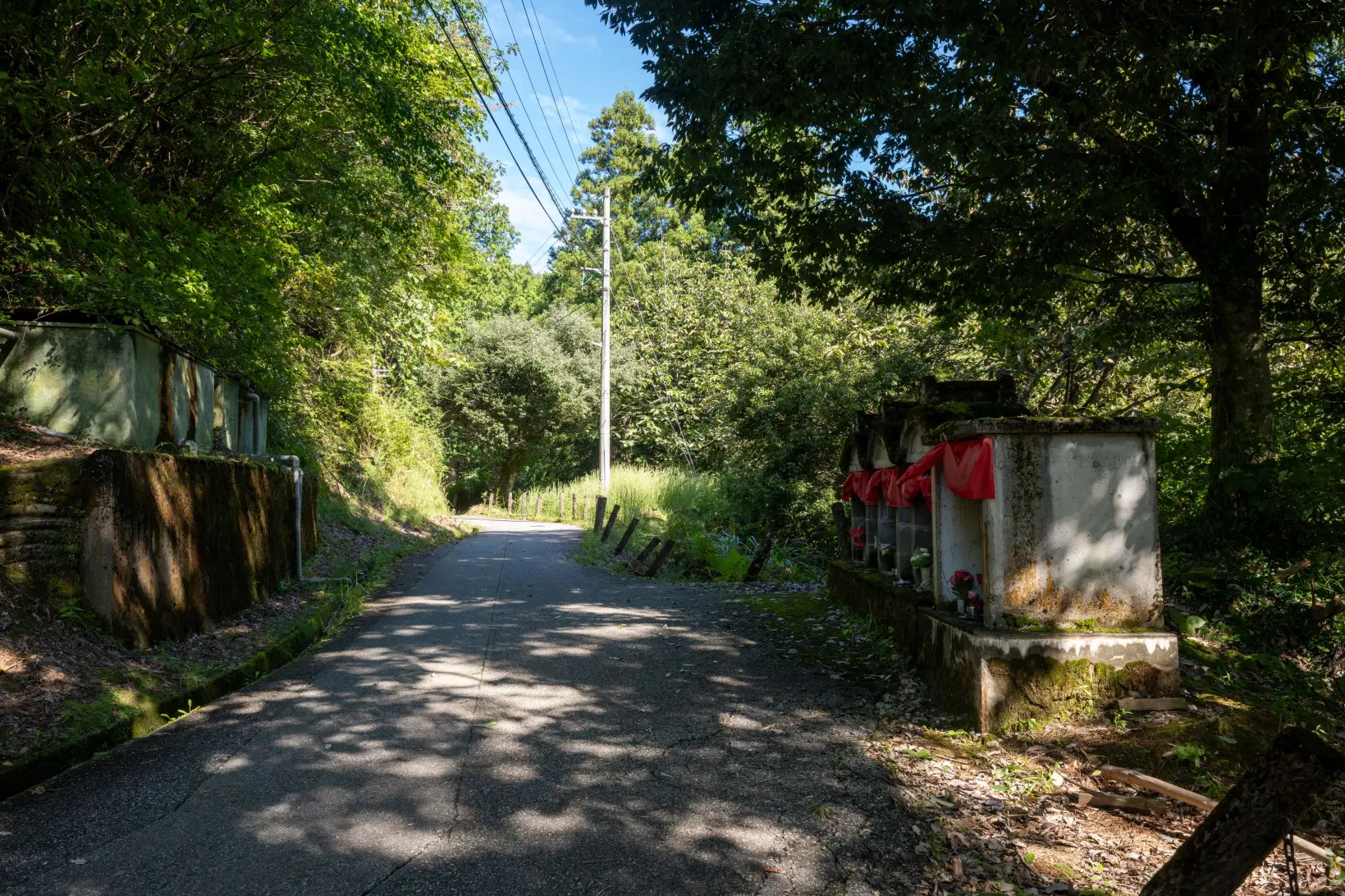
3. Follow the approach into the woods
From reception, continue along the paved approach through the trees. It’s about 400 meters to the spring from here, which takes about 5 minutes on foot. Thirty-three Kannon figures line the approach, reinforcing the sense that this is a pilgrimage route rather than simply a path to a water source.
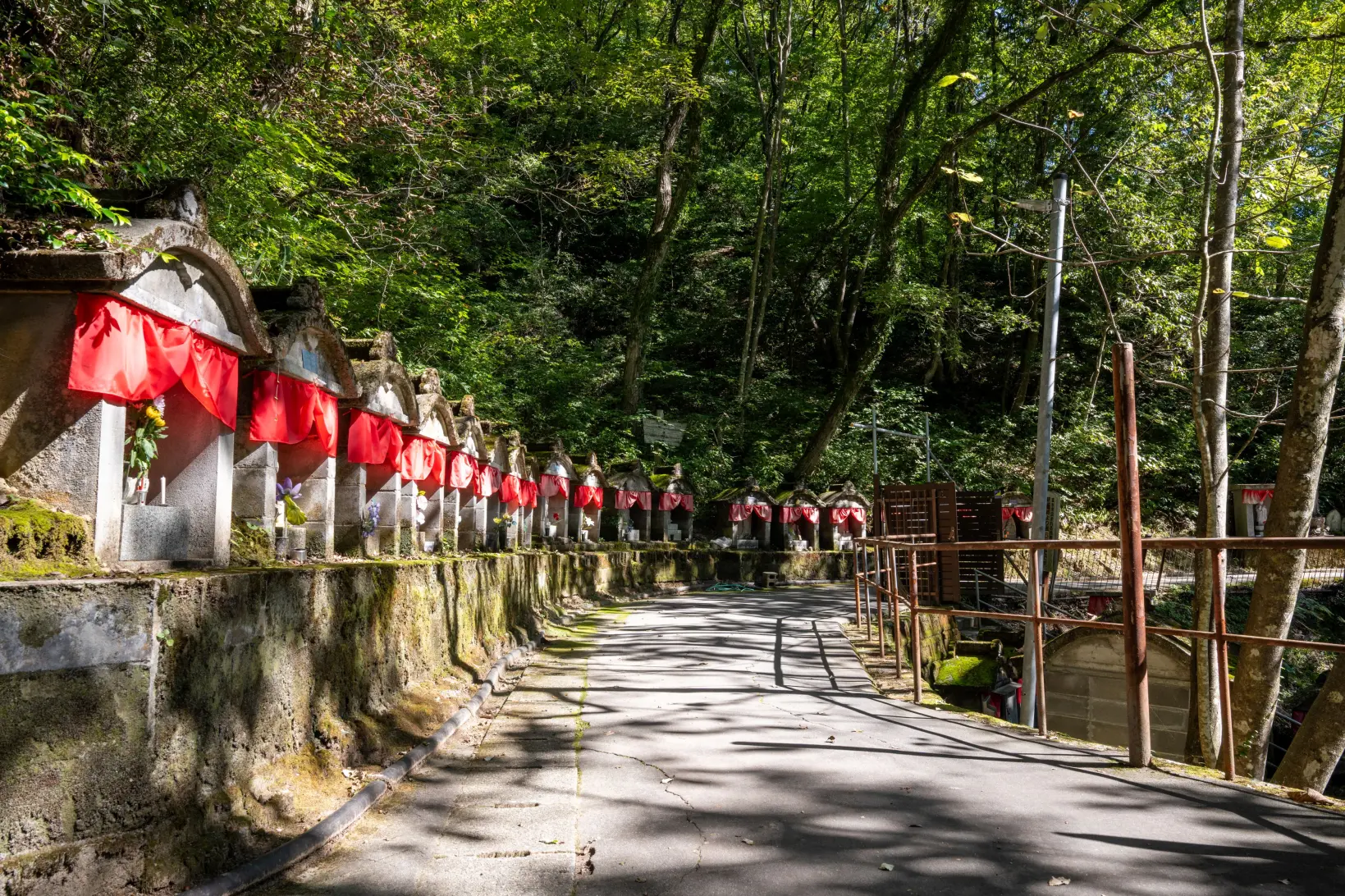
4. Reach the top of the staircase
The main worship area sits below the approach. From here, a steep staircase descends into the ravine toward the hall and spring, so comfortable footwear is recommended.
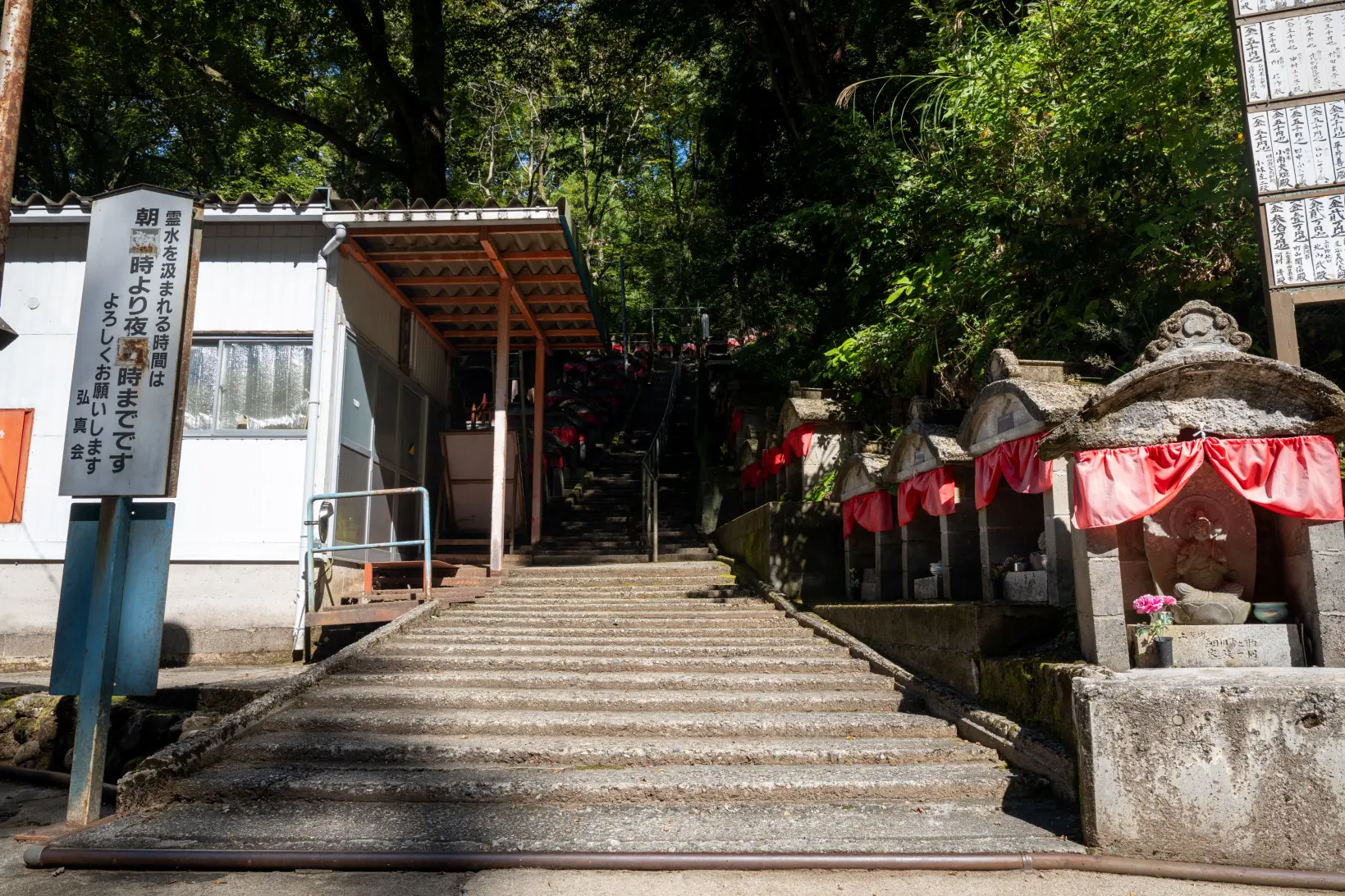
5. Descend to the main sacred area
Take your time on the steps, especially in wet weather. The descent is one of the most atmospheric parts of the visit, with the wooded slopes rising around you as you move lower.
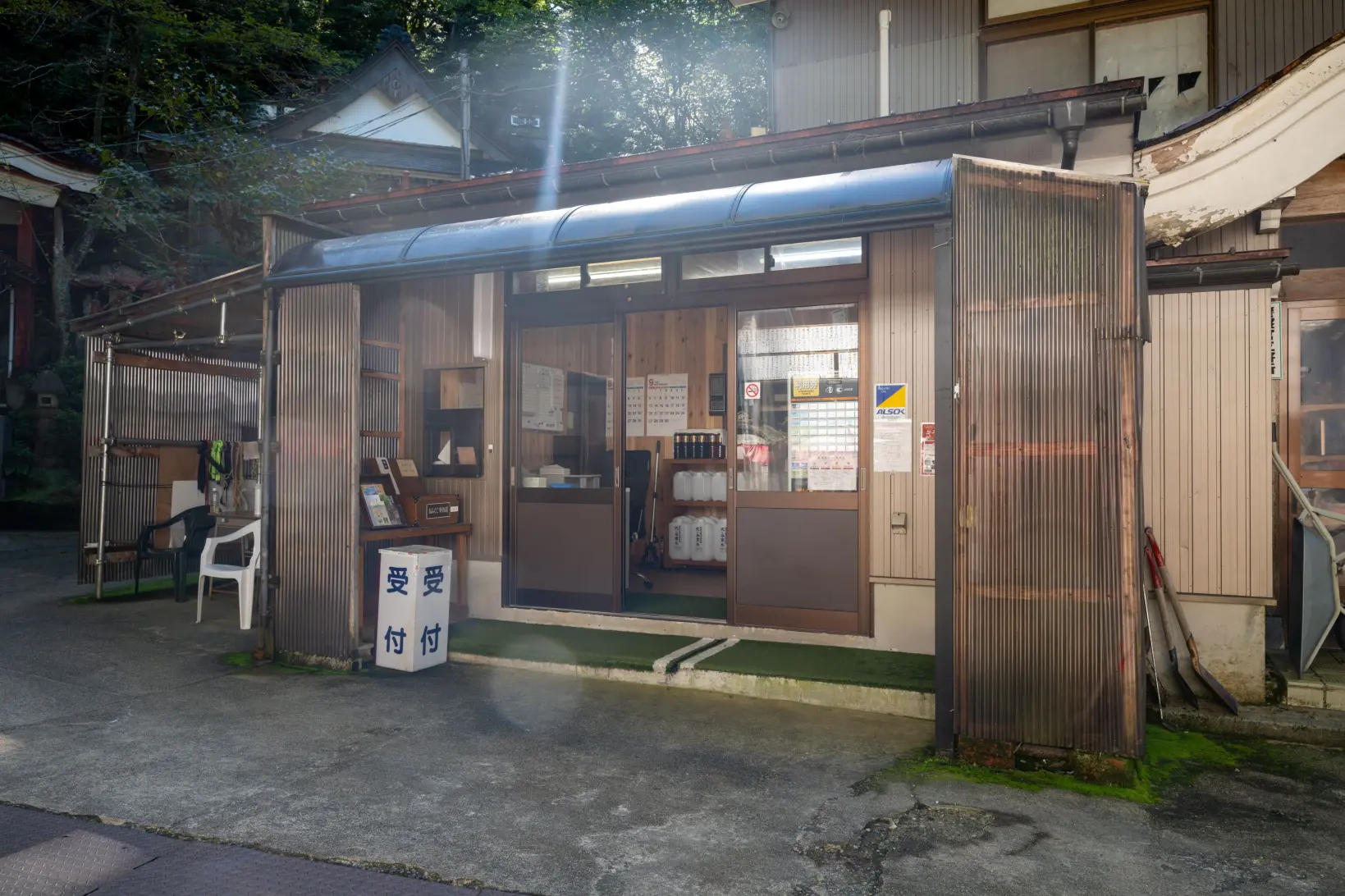
6. Visit the Yakushi Nyorai hall
At the bottom, stop at the hall associated with Yakushi Nyorai before continuing to the water. The spring emerges from the cave area below the hall. There is a second reception area before this where you can buy water containers using a vending machine.
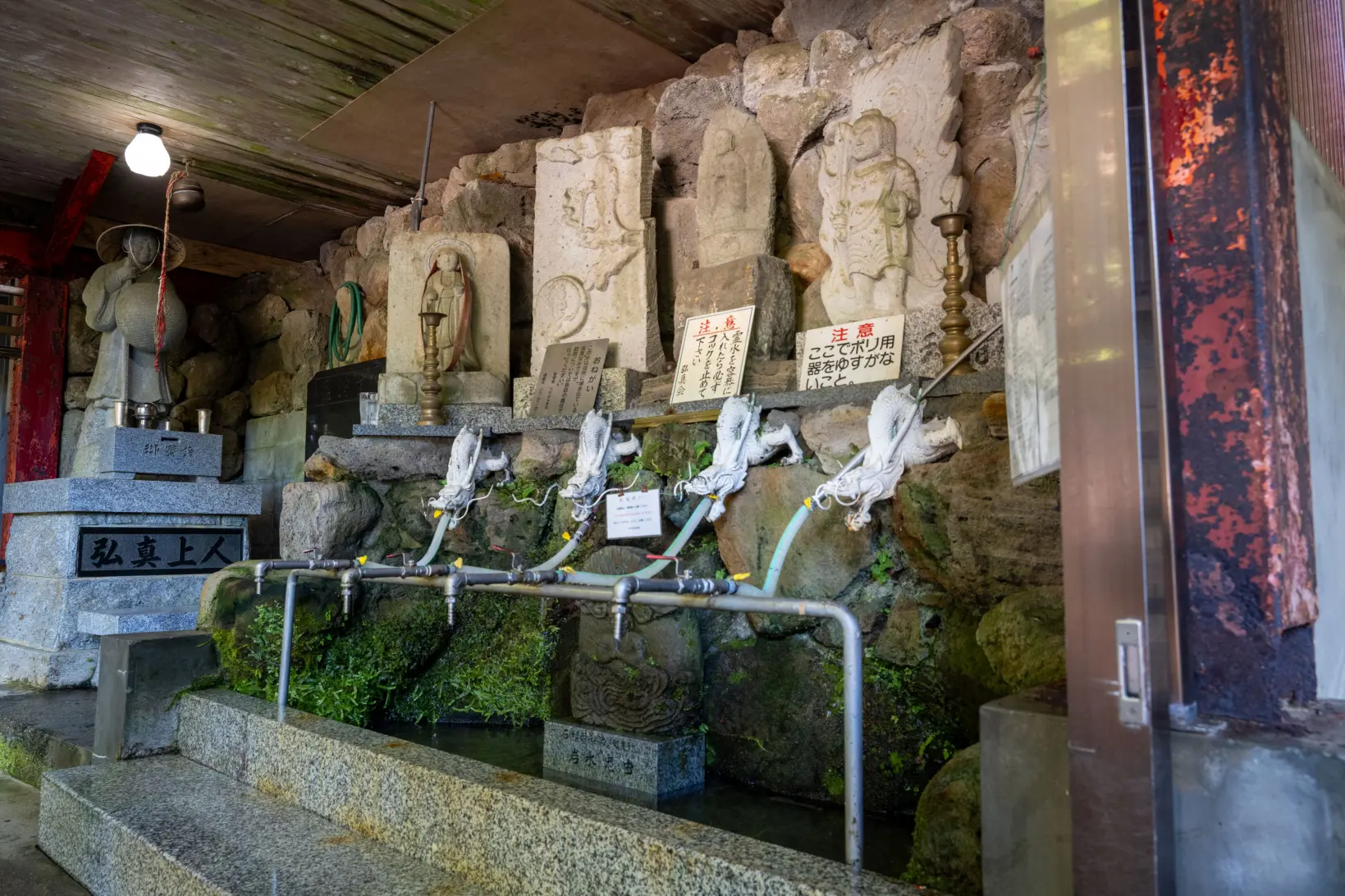
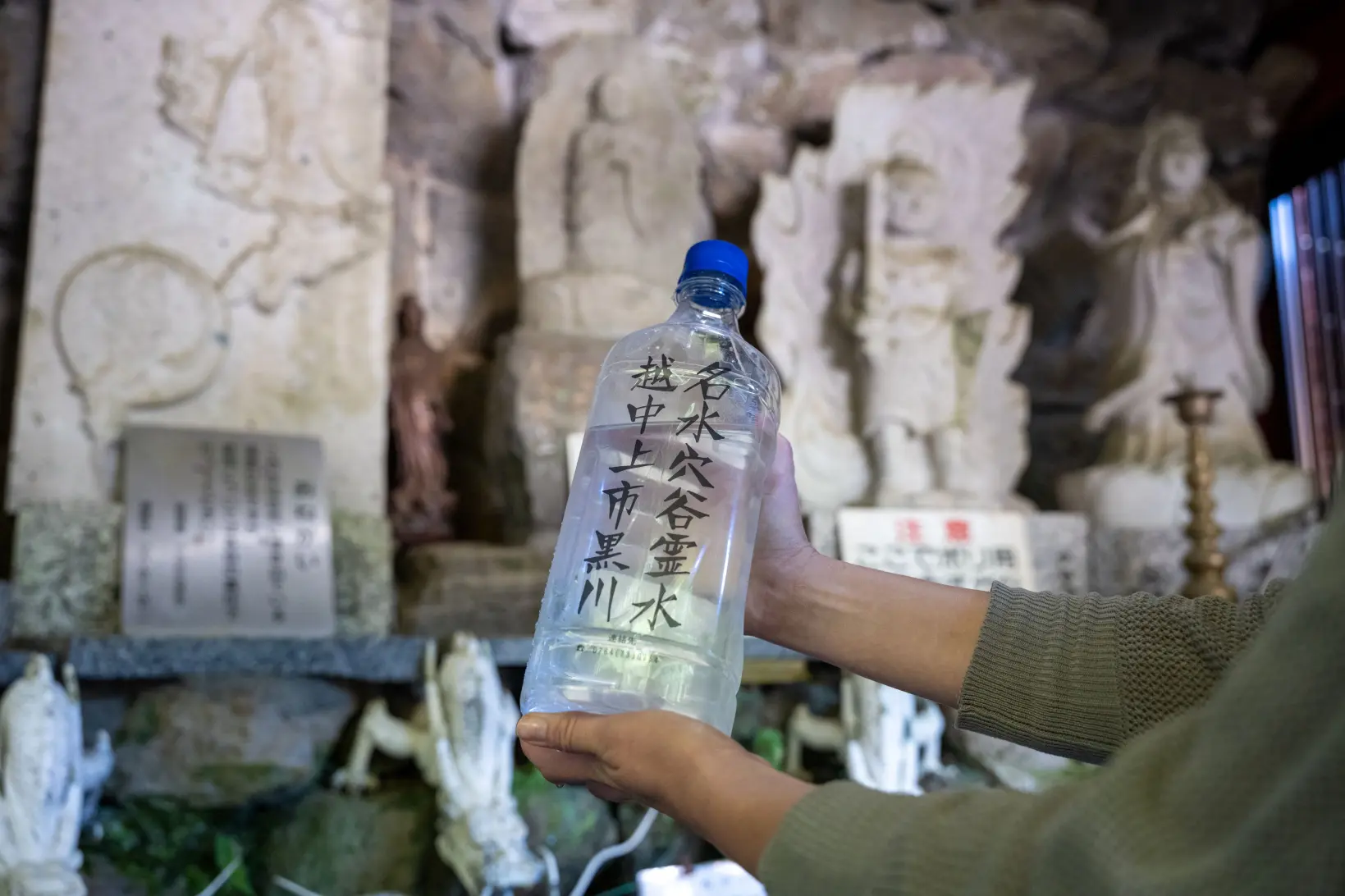
7. Continue to the water collection point
The spring water is directed to the collection area where visitors fill bottles and larger containers. Bring your own bottle if you only want a small amount to drink or take with you.
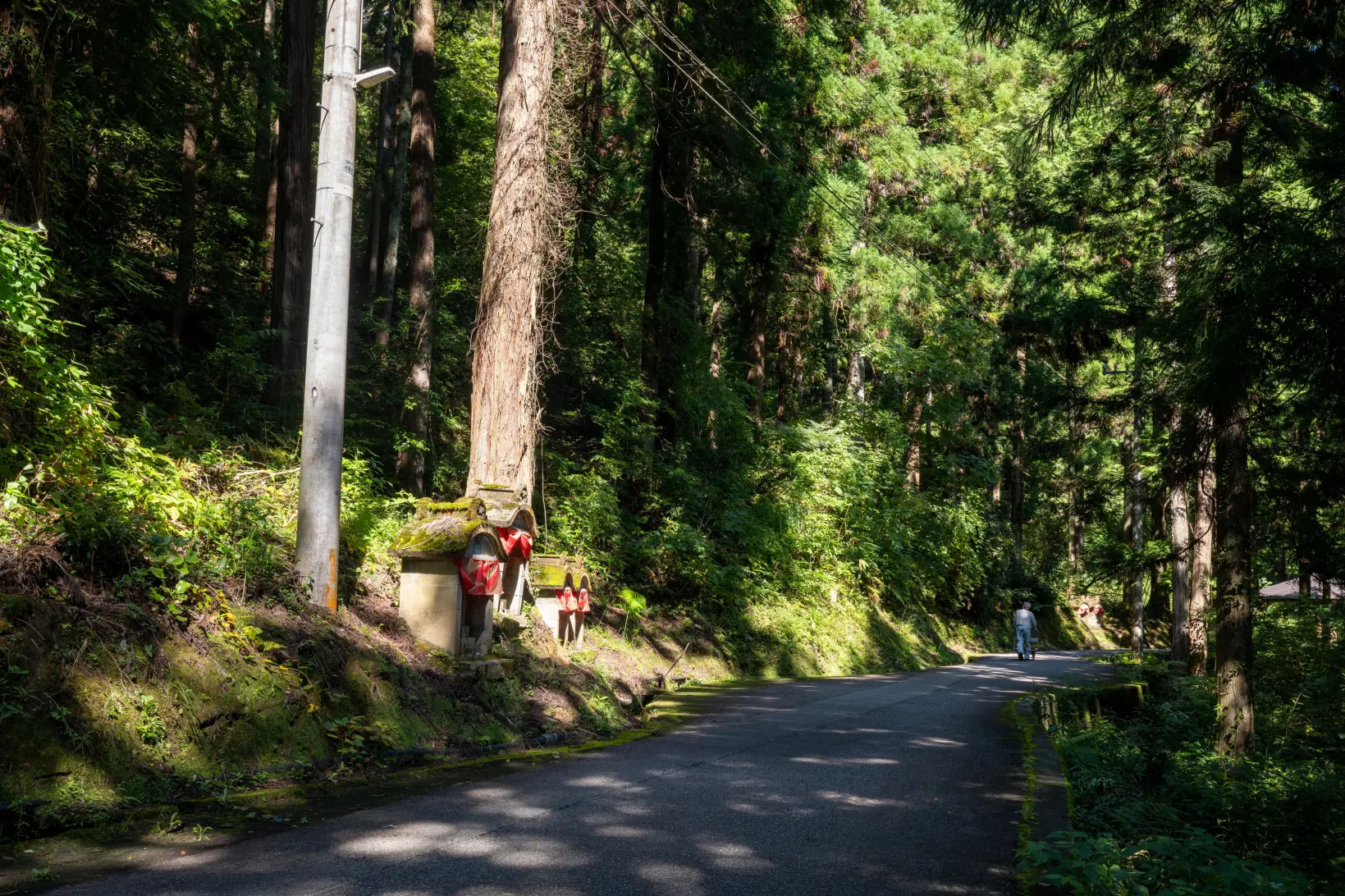
8. Return the same way
After collecting the water, retrace the route up the staircase and along the approach to reception and the parking area. Allow a little extra time for the climb back, especially if you are carrying large bottles of water.
You Might Also Like
-
Inside Kurobe Gorge: Exploring Toyama’s New Kurobe Unazuki Canyon Route
-
Visiting Toyama in Winter
-

Visit Takaoka: The Hometown of One of Japan's Renowned Manga Artists!
-
Discover Toyama
-

"World Heritage Bus," the Tourist Bus That Tours World Heritage Sites
-
Kurobe Gorge is an Unexplored Region That Can Only be Reached by Trolley Train!
-
Toyama Black Ramen and Where to Eat It
-
A Tour on the JR Takayama Line Limited Express "Hida": Comparing Local Sakes of Toyama and Takayama
-
Kurobe Gorge: Secluded Hot Springs, Scenic Walks, and Spectacular Scenery
-
Tateyama Kurobe Alpine Route: A Spectacle-Studded Journey Across the North Japan Alps
-
Touring “Inami,” the Town of Wood Carving
-
A Two-Day Immersive Stay in Gokayama: Where Culture, Craft, and Cuisine Endure
-
A One-day Walking Tour of Himi
-

【Toyama Gourmet Deep Dive】 Tuck into local delicacies in tasty Toyama!
-
Winter Exclusive! All about the illuminations in Toyama
-
Enjoy Toyama by Taking a Sightseeing Train!
-
Enjoy a scenic stroll from Takaoka Station! Tour the historic city of Takaoka
-
Toyama, Made Easy! Your Go-To Guide the Moment You Step Off the Train
-

Perfect Places for Panoramas of the Tateyama Mountains
-

Explore Unazuki Onsen: Ride a famous trolley train and bask in the warmth of Japan's famous hot springs! (Kurobe City, Toyama Prefecture)